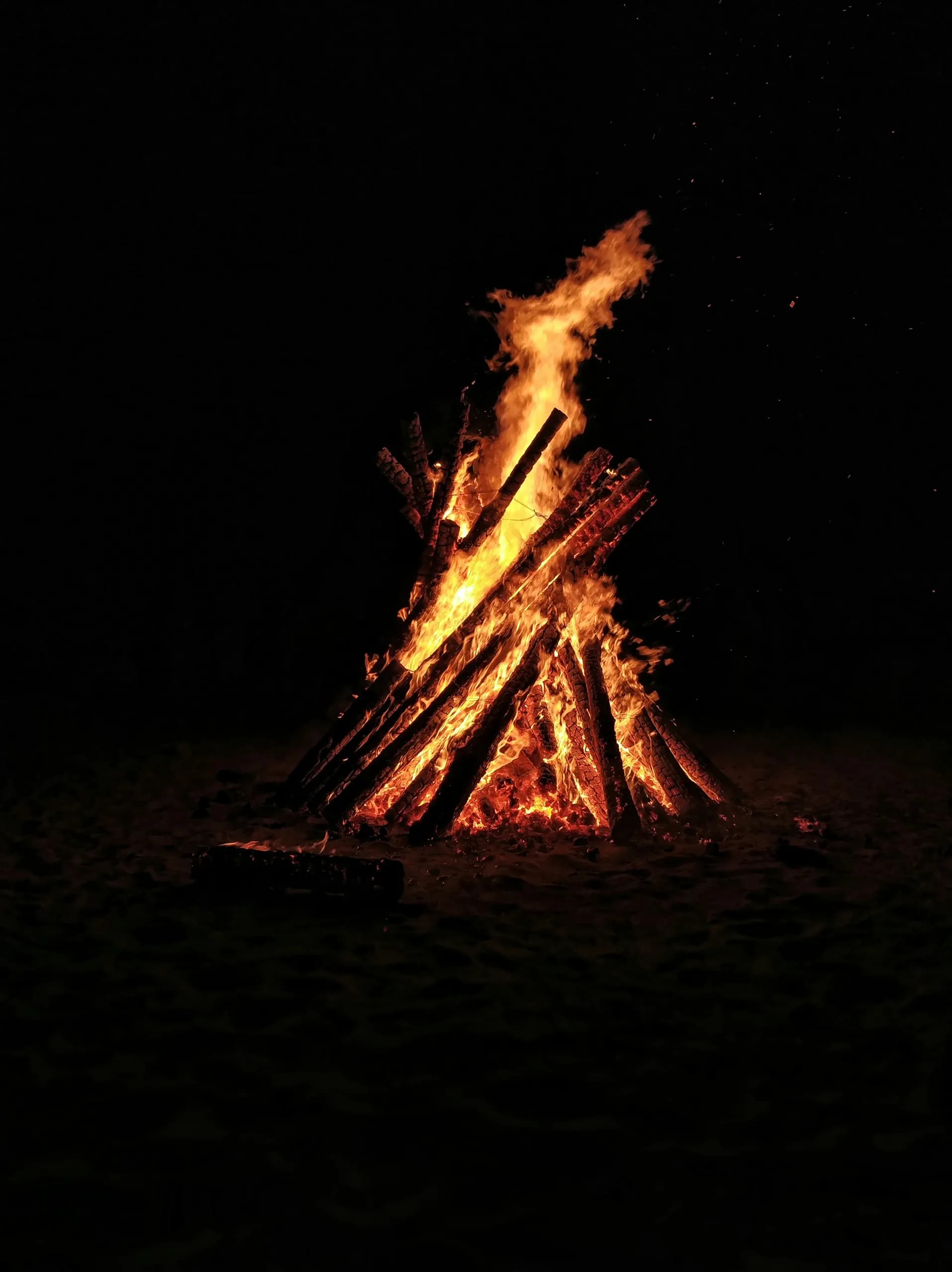
The Lighting of the Kingsflame
Tradition is not the worship of ashes, but the preservation of fire.
The Divine Spark
In ancient Greece, fire was the divine spark, stolen from the gods by the titan Prometheus. He gave it to humanity, providing them with the creativity of civilisation. At the centre of Greek cities was a large fire, tended by the rulers and priests. While the fire was maintained, the people prospered. If it was ever extinguished, they would fall.
Death and Rebirth
Upon the ancient festival of Samhain, The High Kings of Ireland entered into a rite of death and rebirth. Every fire was snuffed out, the entire kingdom plunged into darkness. Then the king would strike the first spark, igniting the bonfire on top of a hill. Long torches were set alight by the blazing pyre and then taken to light the hearths of households and communities. From one single source, light and warmth spread throughout the land.
The Lord’s Hall
In the dark, wet and cold of the Iron Age, the Lord’s Hall was a sanctuary of rest and safety. Anglo-Saxon kings assembled hearth-companions. Together they huddled round the flickering flames, warming themselves as they feasted, sang and recounted the legends of old. There they found friendship and family, a respite from a world filled with marauding raiders, harsh weather and terrifying monsters.
The Kingsflame
The Kingsflame is all these things and more.
By lighting the pyre, we will rekindle that flame which gave birth to England 1100 years ago. It calls forth from days long past the Celtic horn, the Saxon shield and the medieval steed. It summons us to behold the vital spark that runs through our ancient and storied land. As one, we will renew that burning fire which is the beating heart of England.